

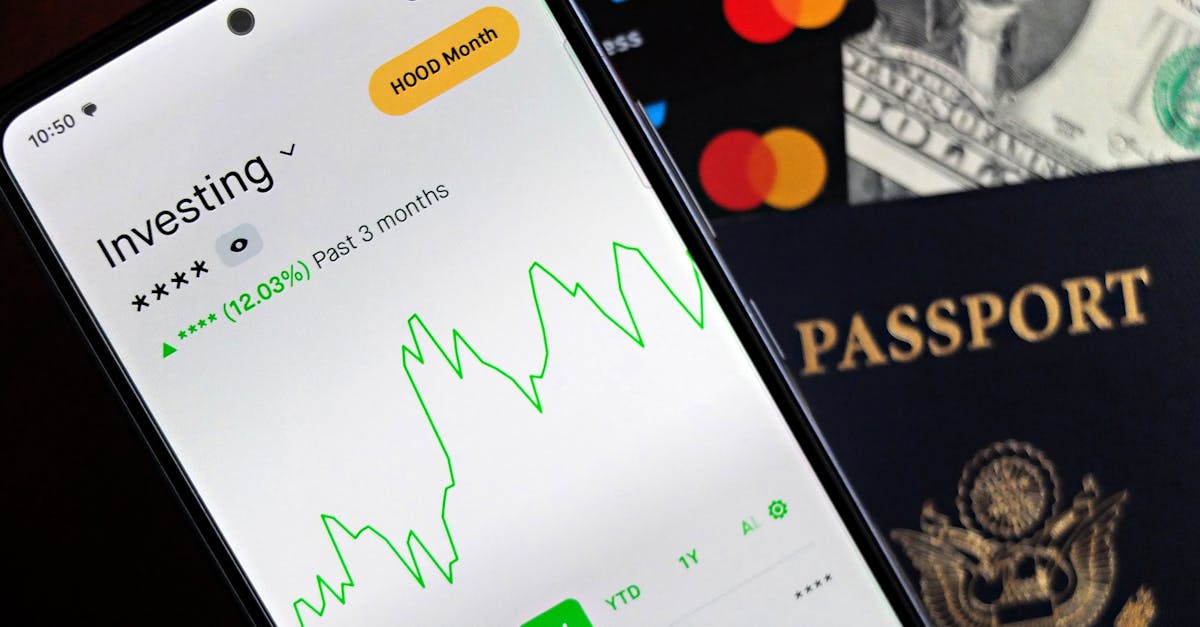
The confetti when a trade completes, the achievement badges and the trending notifications have become the favourite target of regulators and headlines. The most rigorous randomised experiment does find an effect: hedonic gamification increases trading volume by 5.17 %. But it also finds something that is almost never quoted: 70 % of the difference between platforms is not caused by gamification, but by who chooses each platform. And there is a study with real and simulated portfolios at the same time in which playing reduced overconfidence and the disposition effect while increasing two other biases. This article sets out what has actually been measured.
30-second summary: the seven key takeaways
Each row identifies the study and its publication year. It makes sense to isolate the impact of gamification from the influence of the demographic it appeals to.
| Finding | Result | Study and year |
|---|---|---|
| Impact of hedonic gamification on trading volume | Averaging +5.17 % | Chapkovski et al., Management Science (2024) |
| Origins of the platform disparity | Driven by 70 % self-selection alongside 30 % gamification | Chapkovski et al. (2024) |
| Demographics favoring platforms featuring confetti | Users exhibiting lower financial literacy | Chapkovski et al. (2024) |
| Impact of behavioral nudges concerning risk | They tend to amplify exposure, particularly during high volatility | Chapkovski et al., J. Behav. Exp. Finance (2025) |
| Degree of protection provided by financial literacy | A single standard deviation reduces the impact by 56 % | Chapkovski et al. (2025) |
| Biases mitigated by a stock market game | Overconfidence together with the disposition effect | Şenol and Onay, J. Behav. Exp. Finance (2022) |
| Biases exacerbated by it | Familiarity alongside the status quo | Şenol and Onay (2022) |
What you will find here
- The randomised experiment that separated the effect of the design from the effect of who chooses it.
- What trending notifications do exactly, depending on the beliefs the user arrives with.
• How much nudges amplify risk-taking, and what holds it back.
- The study involving a live portfolio alongside a game portfolio simultaneously, and its surprising outcome.
- What aspect of financial behavior gamification truly drives action.
1. The experiment that separated the two things
Philipp Chapkovski, Mariana Khapko and Marius Zoican released the benchmark study in Management Science: a randomized online experiment exploring how gamification influences retail investor behavior.
Their first finding is about who chooses what: participants with lower financial literacy prefer platforms with hedonic gamification elements such as confetti and achievement badges.
The second is the average effect: on average, hedonic gamification increases trading volume by 5.17 %.
And the third is the one that alters how everything else is understood: self-selection drives roughly 70 percent of the activity gap between gamified and non-gamified platforms, while gamification itself accounts for the remaining 30 percent.
Why that distinction matters so much
Comparing the activity of users of a confetti app with that of a sober one does not measure what it appears to. It mostly measures the difference between two kinds of people who were already different before installing anything. The study itself documents this in behaviour: participants who prefer hedonic gamification display noisy trading strategies, while those who prefer non-gamified platforms show more contrarian behaviour.
| Study | What it analysed | What it found | What it does not support |
|---|---|---|---|
| Chapkovski et al. (2024) | Randomised experiment with gamified platforms | +5.17 % volume; 70 % of the effect is self-selection | Experimental setting, not real money at a broker |
| Chapkovski et al. (2025) | 605 participants from four countries, virtual asset | Nudges amplify the risk taken | Simulated asset; does not measure real losses |
| Şenol and Onay (2022) | Investors with a real and a game portfolio at once | Two biases fall and two others rise | Voluntary game participation: self-selection remains |
| Agrawal and Sharma (2025) | 557 users of financial apps in India | Moderates planning and self-efficacy, not attitude | Cross-sectional survey data, not observed behaviour |
| Pal et al. (2021) | Financial app users, structural model | Moderates attitude and planning, not self-efficacy | Results partly different from the previous study |
2. Notifications do not affect everyone in the same way
The same work includes a result about alerts that deserves its own section, because it contradicts both those who defend them and those who condemn them: price trend notifications improve the learning of investors with correct beliefs, but reinforce the trading mistakes of those whose beliefs are incorrect.
In other words, the identical alert magnifies what the user already brought along. To an individual who comprehends the market, it supplies valuable insights; to someone holding a flawed framework, it validates the mistake and compels them to act upon it. A functionality that remains neutral by nature triggers contrasting outcomes contingent on the consumer.
3. How much nudges amplify risk
The same authors published a second experiment in Journal of Behavioral and Experimental Finance, focused on risk rather than volume. A total of 605 participants from four countries traded a virtual asset on an experimental platform whose gamified version included digital nudges — achievement badges and motivational messages — explicitly designed to encourage holding decisions.
The result: nudges significantly amplify risk-taking, particularly in high-volatility environments.
And the variable that modulates the effect is the same one that appeared in the earlier study, now quantified: the effect is more pronounced among inexperienced traders and those with lower financial literacy, and a one-standard-deviation increase in financial literacy reduces the impact by 56 %.
| Factor | Effect on behaviour | Practical reading |
|---|---|---|
| Hedonic gamification | +5.17 % of trading volume | Real, but modest against the usual headline |
| Platform self-selection | 70 % of the observed difference | Comparing users of two apps is misleading |
| Nudges to hold positions | Amplify risk-taking | Worse the higher the volatility |
| Financial literacy | −56 % of the impact per standard deviation | The best measured protective factor |
| Trend notifications | Ambivalent: they teach or reinforce the error | Depend on the user’s prior beliefs |
4. The study with two portfolios at once
Duygu Şenol and Ceylan Onay devised an experiment that circumvents a frequent issue within this domain: participants being aware of observation. The pair utilized transaction records from investors maintaining simultaneous active portfolios through an investment brokerage alongside a stock exchange simulation game, yielding a framework devoid of both observer and subject expectancy biases.
Their first finding is methodologically important: investors have different biases in the real and the simulated environment. They do not behave the same way when the money is real.
And the second contradicts the usual narrative about gamification: participating in a stock game affects all biases differently depending on the degree of participation. Overconfidence and the disposition effect can be mitigated and decrease with more active participation in the game, while familiarity and status quo biases increase.
The authors add who takes part, a figure that returns to self-selection: young, inexperienced investors with medium-sized portfolios, and men, are more likely to participate.
5. Which part of behaviour it acts on
Two studies utilizing structural equation models have sought to identify which specific link in the chain gamification actually influences. Their findings do not entirely align, and this divergence offers valuable insights.
Garima Agrawal and Gunjan Sharma, drawing on data from 557 users of financial applications in India, discover that gamification substantially moderates the connections linking financial planning to financial conduct, as well as financial self-efficacy to conduct, though it fails to do so for financial attitude and conduct. Furthermore, they incorporate the features seasoned users demand: real-time feedback, progress tracking and social sharing.
Abhinav Pal and two co-authors, with an analogous model, find a partly different pattern: gamification features significantly moderate the influence of financial attitude and of financial planning activity on financial management behaviour, but not the influence of self-efficacy.
What both share, and what is worth retaining: gamification does not act on behaviour directly, but by amplifying or dampening the effect of dispositions the user already had. It is a multiplier, not an engine.
What to do with this in practice
Ordered by the strength of the evidence behind each point:
• Do not compare users of two different applications. 70 % of the activity difference is self-selection, not design.
- Turn off trend notifications if you have no thesis of your own. They reinforce the mistakes of users who arrive with incorrect beliefs.
• Expect the effect to grow with volatility. Nudges amplify the risk taken above all in volatile environments.
• Financial literacy is the measured buffer. One standard deviation reduces the impact of nudges by 56 %.
- Never presume that a simulator is invariably safe or instructional. It diminishes excessive certainty alongside the disposition effect, while simultaneously boosting familiarity as well as status quo bias.
Frequently asked questions
Are gamified trading apps driving higher user activity?
Somewhat, but less than the direct comparison suggests. In the randomised experiment published in Management Science, hedonic gamification increases trading volume by 5.17 % on average, but the difference in activity between gamified and non-gamified platforms is 70 % due to self-selection and only 30 % to gamification.
Who do platforms with confetti and badges attract?
A specific profile, and that is the root of the issue. Traders possessing reduced financial knowledge favor systems featuring hedonic gamification components, and individuals leaning toward such gamification exhibit erratic trading tactics, whereas those opting for non-gamified environments demonstrate a more contrarian approach.
Do alerts assist or hinder?
Both, depending on who receives them. The same experiment documents that price trend notifications improve the learning of investors with correct beliefs, but reinforce the trading mistakes of those whose beliefs are incorrect. The feature has no single effect: it depends on the user’s mental model.
Do they make people take more risk?
Yes, and it is measured. In the experiment with 605 participants from four countries, digital nudges designed to encourage holding positions significantly amplify risk-taking, particularly in high-volatility environments, with a more pronounced effect among inexperienced traders and those with lower financial literacy; a one-standard-deviation increase in financial literacy reduces the impact by 56 %.
Does a stock market simulation harm a trader’s performance?
Not uniformly. When researchers examined individuals managing both a genuine and a simulated portfolio concurrently, overconfidence and the disposition effect were observed to diminish alongside heightened engagement within the game, whereas familiarity and status quo tendencies grew stronger, demonstrating that participants exhibited distinct behavioral patterns across real-world and virtual settings.
What we do not know
- What happens with real money. The available causal measurements are experiments with virtual assets, not with client portfolios.
• Duration of the effect. These trials consist of brief sessions, and long-term habituation to the stimuli across several months remains unrecorded.
• Whether the net balance is positive or negative. Greater volume and higher risk do not inherently equate to an inferior result, yet scarce studies assess ultimate returns.
- Where the boundary of acceptable design lies. The distinction between a useful nudge and a manipulative one is much discussed and little operationalised.
References
1. Chapkovski, P., Khapko, M. and Zoican, M. Trading Gamification and Investor Behavior. Management Science, 2024. DOI: 10.1287/mnsc.2022.02650
2. Chapkovski, P., Khapko, M. and Zoican, M. Gamified risk-taking. Journal of Behavioral and Experimental Finance, 2025. DOI: 10.1016/j.jbef.2025.101049
3. Şenol, D. and Onay, C. Impact of gamification on mitigating behavioral biases of investors. Journal of Behavioral and Experimental Finance, 2022. DOI: 10.1016/j.jbef.2022.100772
4. Agrawal, G. and Sharma, G. An Evaluation of Gamification on Financial Conduct in Relation to the Effectiveness of Behavioral Traits. Financial Planning Review, 2025. DOI: 10.1002/cfp2.70016
5. Pal, A., Indapurkar, K. and Gupta, K. Gamification of financial applications and financial behavior of young investors. Young Consumers, 2021. DOI: 10.1108/yc-10-2020-1240
This content is for information only and does not constitute financial advice or an investment recommendation. The studies cited analyse experimental settings and specific samples that are not comparable with one another, and none of them allows the effect of any particular platform on any particular user to be anticipated.